In the modern food industry, "sugar reduction" is no longer a niche health trend—it is a regulatory and consumer mandate. However, the biggest hurdle remains the same: taste. When sugar is removed, a product often loses more than just sweetness; it loses body, aroma, and the "craveability" that keeps consumers coming back.
This guide dives deep into the ultimate flavor enhancement strategies that allow developers to slash sugar content by 30% to 50% (and sometimes more) while maintaining a profile that satisfies the most demanding palates.
To reduce sugar effectively, we must first acknowledge that sucrose is a multifunctional ingredient. It provides more than just a sweet spark on the tongue. In most formulations, sugar acts as a humectant, a bulking agent, and a flavor carrier. When you remove it, you create "flavor gaps."
Sugar masks bitterness, rounds out acidic notes, and contributes to the Maillard reaction (browning). Without it, the "off-notes" of other ingredients—like the metallic tang of certain preservatives or the earthiness of plant proteins—become painfully apparent. Our strategy focuses on filling these gaps using culinary science rather than just chemical substitutes.
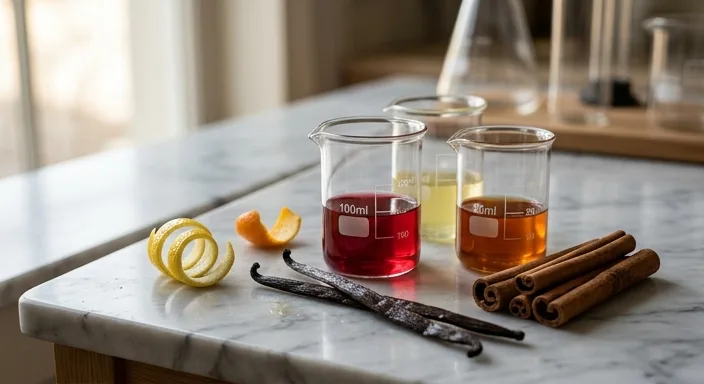
Flavor is not just in the mouth; it is in the brain. Over 80% of what we perceive as "taste" is actually olfactory (smell). This is known as cross-modal perception. By triggering the brain's expectation of sweetness through scent and texture, we can significantly reduce the actual amount of sucrose or high-intensity sweeteners required.
Research shows that if a consumer smells a "sweet" scent like strawberry or vanilla before or during consumption, their brain perceives the liquid as sweeter than a neutral-scented liquid with the exact same sugar concentration. Leveraging this psychological bypass is the cornerstone of advanced flavor boosting.
Aromatics are the most powerful tool in the sugar-reduction toolkit. Certain volatile compounds are inherently linked to sweetness in our evolutionary memory. By integrating these into your product, you can fool the palate:
The relationship between acidity and sweetness is a seesaw. In many high-sugar products, the sugar is actually there to balance high acidity (think of soda or balsamic glaze). By strategically reducing the acidity or changing the type of acid used, you can lower the sugar requirements.
Malic Acid vs. Citric Acid: Citric acid has a sharp, immediate "bite." Malic acid (found in apples) has a smoother, lingering sourness that complements sweet notes better. Using a blend of organic acids can create a smoother flavor curve, allowing the remaining sugar to "pop" more effectively.
Certain spices contain compounds that stimulate the same receptors as sugar or enhance the sweet signal. Cinnamon is the gold standard here; its warm, woody notes are so closely associated with sweets that the brain fills in the blanks.
Other notable enhancers include:
When you remove sugar, the liquid becomes "thin" or "watery." This loss of viscosity is a subconscious cue to the brain that the product is "diet" or "less satisfying." To fix this without adding calories, we use texturizers:
We are currently in the era of Flavor Modulators. These are not sweeteners themselves, but they change how our taste buds perceive sugar. Some modulators work by blocking the "bitter" receptors that are often triggered by stevia or monk fruit. Others work by keeping the "sweet" signal open on the tongue for a few milliseconds longer.
By combining a small amount of sugar with a high-potency natural sweetener (like Stevia Reb-M) and a flavor modulator, you can achieve a sweetness curve that is nearly indistinguishable from 100% sucrose.
Can I reduce sugar without using any artificial sweeteners?
Absolutely. By using a combination of aromatics (vanilla/fruit essences), sweet spices (cinnamon), and bulking fibers (inulin), you can achieve significant sugar reduction while maintaining a "clean label" status.
What is the best sugar replacement for baking?
Allulose is currently the top choice for baking because it undergoes the Maillard reaction (browning) and caramelizes just like traditional sugar, which most other sweeteners cannot do.
Does salt help in sugar reduction?
Yes. A tiny pinch of salt (sub-threshold levels) can actually suppress bitterness and enhance the perception of sweetness in chocolate, fruit, and caramel-based products.
Monk Fruit Sweetener
View on AmazonPure Vanilla Extract
View on AmazonShare this guide:
If you found this guide helpful, consider leaving a tip!