I may earn a commission at no extra cost to you. #ad
Free Guide: How to Use AI-Driven Data for Predictive Flavor Profiling in Product Development
Jump to Section
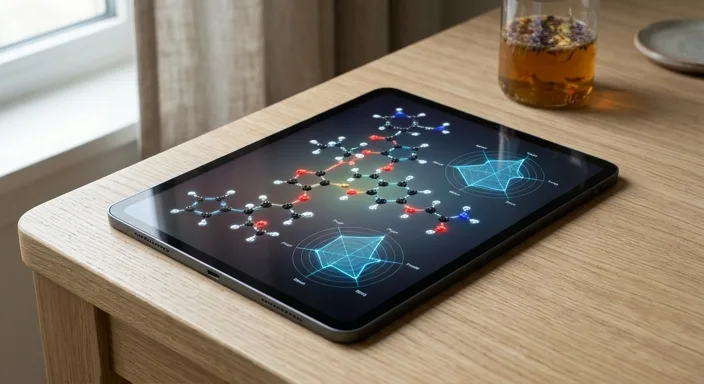
The traditional method of flavor development has long been a cycle of "mix, taste, adjust, repeat." While sensory experts and flavorists possess incredible intuition, the speed of modern consumer markets demands a more efficient approach. Predictive flavor profiling leverages Artificial Intelligence (AI) to forecast how specific chemical combinations will be perceived by the human palate before a single physical sample is even compounded.
By digitizing the "flavor space," R&D teams can simulate thousands of iterations in seconds. This doesn't replace the human element; rather, it provides a high-resolution roadmap that eliminates the most likely failures, allowing flavorists to focus on fine-tuning winning profiles.
The Role of Machine Learning in Sensory Analysis
Machine learning (ML) models are the engine behind predictive profiling. Unlike traditional statistical models, ML can identify non-linear relationships between volatile compounds and sensory descriptors. For example, a model might identify that a specific ratio of cis-3-Hexenal and furaneol produces a "fresh strawberry" note, but only when a masking agent is present to suppress green off-notes from a pea protein base.
Neural networks are particularly adept at processing "Digital Fingerprints" of flavors—complex arrays of data points representing molecular weight, boiling points, and functional groups. These networks are trained on vast datasets of historical sensory panels, allowing the computer to "predict" how a human panel would score a theoretical recipe on attributes like sweetness, acidity, or "mouthfeel."
Key Data Sources for Flavor Prediction
The accuracy of an AI model is entirely dependent on the quality of the data it consumes. In flavor R&D, we generally look at three primary streams:
- Chemical Analytics: GC-MS (Gas Chromatography-Mass Spectrometry) data provides the molecular breakdown of successful and unsuccessful benchmarks.
- Consumer Preference Data: Historical data from target demographics, including regional preferences, age-group biases, and current market trends.
- Sensory Descriptive Analysis: Quantitative data from trained sensory panels that link specific chemical markers to descriptive terms (e.g., "woody," "floral," "metallic").
Implementing AI in Your Development Cycle
Transitioning to an AI-driven workflow requires a structured approach. It is not about buying a single piece of software, but about building a data pipeline. Here is the technical framework:
- Data Normalization: Ensure all historical sensory reports and lab results are converted into a standardized digital format. Without consistency, the AI will produce "hallucinations" or inaccurate predictions.
- The "Digital Twin" Phase: Create a digital twin of your ingredient library. Each ingredient should be characterized by its molecular profile, cost, and stability constraints.
- Model Training: Use a supervised learning approach where you feed the AI known recipes and their known sensory outcomes. This allows the model to learn the "grammar" of your specific product category.
- Simulation and Iteration: Input your target profile (e.g., "High-protein chocolate drink with no chalkiness"). The AI suggests 5–10 starting formulations that mathematically align with that goal.
Challenges and Technical Limitations
While powerful, AI is not a magic wand. One of the primary challenges is Synergy and Masking. The way two molecules interact is not always additive. Sometimes, 1+1=3 (synergy), or 1+1=0.5 (antagonism/masking). Current models often struggle with complex food matrices, such as plant-based meats, where fats and proteins significantly alter flavor release.
Furthermore, "Black Box" algorithms can be difficult for flavorists to trust. If an AI suggests an unconventional ingredient, the R&D team needs to understand why. Explainable AI (XAI) is the current frontier, where models provide a rationale for their predictions, bridging the gap between data science and organoleptic expertise.
Future Trends in Computational Gastronomy
We are moving toward Real-Time Optimization. Imagine a production line equipped with sensors that feed data back to an AI, which then makes micro-adjustments to the flavor injection system to account for variations in raw material quality (e.g., a batch of cocoa powder that is slightly more bitter than the last).
Additionally, the integration of Generative AI is allowing developers to explore "white space" flavors—profiles that have never existed before but are mathematically predicted to be highly palatable to specific consumer segments.
Frequently Asked Questions
Can AI replace a trained flavorist?No. AI serves as an "augmented intelligence" tool. It handles the data processing and narrow-path optimization, but the creative vision, final sensory validation, and regulatory oversight remain firmly in human hands.
What is the ROI on AI-driven flavor profiling?Companies typically see a 30-50% reduction in "Time to Market" and a significant decrease in ingredient waste, as fewer physical prototypes are required to reach the final gold standard.
Do I need a team of data scientists to start?Not necessarily. Many SaaS platforms now offer "Low-Code" flavor development tools specifically designed for food scientists, though a baseline understanding of data hygiene is essential.