Free Guide: How to Master Precision Fermentation for Enhanced Beverage Flavors
Jump to Section
Understanding Precision Fermentation
Precision fermentation represents the next frontier in food and beverage technology. Unlike traditional fermentation, which uses whole organisms to transform bulk ingredients (like yeast turning sugar into alcohol), precision fermentation uses microbial hosts as "cell factories" to produce specific, high-value functional ingredients. In the context of beverage development, this allows for the creation of identical-to-nature flavor molecules, proteins, and sweeteners without the variability of traditional agriculture.
For beverage formulators, this means access to rare botanical notes, specific citrus esters, or dairy proteins that are consistent, sustainable, and highly potent. By mastering this process, brands can decouple their flavor supply chain from seasonal harvests and climate instability.
The Science of Flavor Synthesis
At the heart of precision fermentation is metabolic engineering. Scientists identify the genetic pathway in a plant or animal that produces a specific flavor compound—for example, the pathway that creates the specific raspberry ketone or the valencene in oranges. This genetic sequence is then inserted into a fast-growing microorganism like Saccharomyces cerevisiae (yeast) or Pichia pastoris.
Once engineered, these microbes are fed a simple carbon source (usually glucose or agricultural byproducts). As they grow, they follow the "instructions" in their DNA to synthesize the target flavor molecule. This molecule is then harvested and purified, resulting in a flavor booster that is chemically identical to its natural counterpart but produced with a fraction of the land and water usage.
Microbial Host Selection
Choosing the right microorganism is critical for flavor success. Different hosts have different metabolic capabilities:
- Yeast (S. cerevisiae): The gold standard for ethanol and ester production. It is robust, well-understood, and excellent for producing fruity and floral notes.
- Filamentous Fungi: Often used for larger protein synthesis, such as animal-free whey or collagen for functional beverages.
- Bacteria (E. coli): Highly efficient for certain small molecules but requires rigorous purification to ensure no endotoxins remain in the final beverage-grade product.
The choice depends on the complexity of the flavor molecule and the required yield. For most beverage aromatic compounds, yeast remains the preferred choice due to its natural affinity for liquid environments and its GRAS (Generally Recognized as Safe) status.
Bioreactor Optimization Strategies
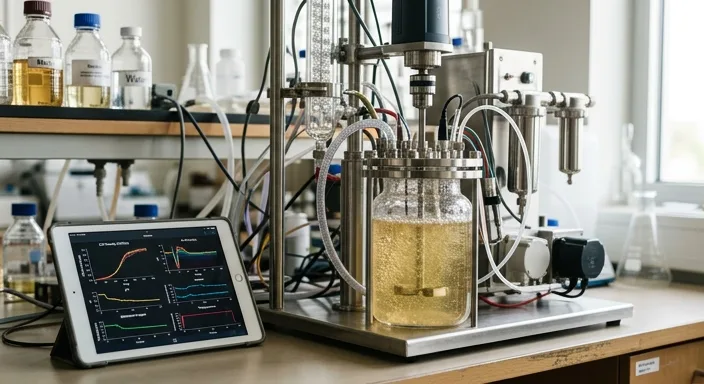
To master precision fermentation, one must master the environment. The bioreactor is the "womb" where flavor is created. Key parameters include:
- Dissolved Oxygen (DO): Critical for aerobic fermentation. If oxygen levels drop, the microbes may switch to anaerobic pathways, producing unwanted off-flavors like excess acetic acid.
- pH Control: Flavor molecules are often sensitive to acidity. Maintaining a stable pH ensures the stability of the molecule and the health of the host.
- Temperature Profiles: Some flavors are synthesized best at lower temperatures to slow down metabolic rates and prevent "stress" compounds from forming.
Downstream Processing and Purification
The "precision" in precision fermentation doesn't end when the fermentation stops. Downstream processing (DSP) involves separating the target flavor molecule from the biomass (the microbes) and the broth. This typically involves centrifugation, filtration, and chromatography.
The goal is to reach a purity level where no residual "yeasty" or "fermentation" notes interfere with the target profile. For high-end beverage applications, purity levels often exceed 98%, ensuring that the citrus, floral, or spice notes are crisp and clean.
Application in Beverage Formulations
Once you have your fermented flavor booster, the application stage requires a delicate touch. Because these molecules are often highly concentrated, they are used in parts per million (PPM) concentrations. Precision fermentation allows for:
- Non-Alcoholic Spirits: Creating the "burn" and complexity of gin or bourbon without the alcohol.
- Enhanced Fruit Juices: Boosting the top-notes of orange juice that are typically lost during pasteurization.
- Sustainable Dairy-Free Lattes: Using fermented milk proteins to achieve the exact mouthfeel and froth of cow's milk in canned coffee.
Frequently Asked Questions
Is precision fermentation considered GMO?
The microorganisms used are genetically engineered, but the final flavor molecules are purified and contain no genetic material. Regulatory status varies by country, but many products are sold as "non-GMO" if the final ingredient is pure and micro-free.
How does it differ from traditional fermentation?
Traditional fermentation focuses on the transformation of the whole substrate (like cabbage into kimchi). Precision fermentation focuses on using the microbe to produce one specific ingredient that is then extracted.
Is it cost-effective for small beverage brands?
Currently, the infrastructure is expensive, but many "fermentation-as-a-service" companies allow smaller brands to contract manufacture specific flavor boosters without owning their own bioreactors.